
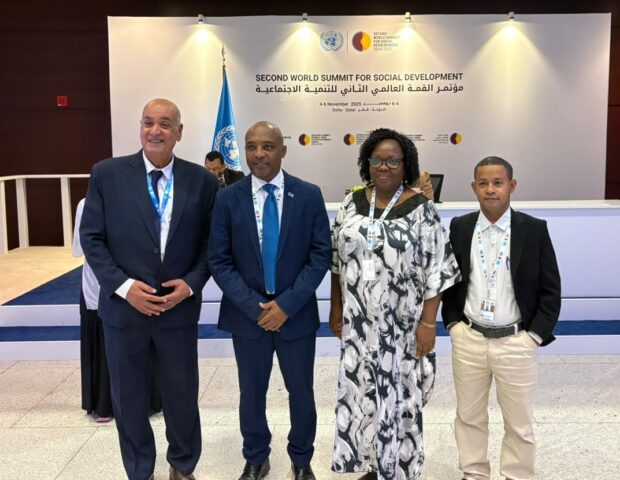
By Refat Sabbah, President of the Global Campaign for Education (GCE)
As we gather at events like the World Summit on Social Development II (WSSDII) and side discussions hosted by the Global Partnership for Education (GPE), one question stands out: What role can civil society play in ensuring equity and reaching the most marginalised in our global education transformation agenda? In my recent talking points for a GPE side event, I delved into this, sharing real-world examples of civil society’s impact and highlighting the critical need for full funding in education. Today, I want to expand on that in this blog, turning those insights into a broader conversation about how we can build inclusive education systems that truly leave no one behind.
If education is to fulfill its transformative promise, it must be rooted in human rights, gender equality, and justice. This isn’t just rhetoric, it’s the foundation of an education system that creates opportunities for all. We’re not talking about preparing learners to merely adapt to the world as it is; we need to equip every individual with the skills and mindset to reshape it for the better. This vision is what we owe to current and future generations.
Civil society is the driving force behind making this vision a reality. From regional and national education coalitions to teachers’ unions, youth movements, community-based organisations, and women-led groups, these entities have been the heartbeat of education progress for decades. Their involvement isn’t optional, it’s essential for building legitimacy, ensuring accountability, and driving lasting change.
Over the past 25 years, I’ve witnessed and supported members of civil society organisations (CSOs) engage, mobilise, and push back against challenges in some of the toughest contexts. They have advocated tirelessly for the right to education, offering evidence-based solutions grounded in community realities. Here are just a few inspiring examples that highlight how civil society is building inclusive education systems:
Brazil: Our members successfully advocated for a law that establishes a cost-per-student standard, ensuring equitable financing across the board and reducing disparities in resource allocation.
Tanzania: Through persistent advocacy, CSOs helped secure the National Re-entry Implementation Plan, which guarantees the right of girls to return to school after pregnancy – a crucial step toward gender equality in education.
Yemen: Even amid ongoing conflict, civil society shaped the national Education Sector Plan, demonstrating resilience and the power of local voices in crisis situations.
Mongolia: Activism led to the country’s first comprehensive bilingual-education policy for ethnic minorities, promoting inclusivity and cultural preservation.
Mozambique: Civil society efforts eliminated hidden school fees, making education more accessible for low-income families and marginalised communities.
And let’s not forget the ongoing crisis in Palestine, where civil society has shown that education is more than a service, it is a fundamental human right and a tool for liberation and justice. These stories prove that when communities lead, education systems transform.
The Funding Imperative: Bridging the Gap for a Just Future
But advocacy alone isn’t enough. To sustain these changes, education must be fully funded and publicly financed. The disparities are stark. Low-income countries spend an average of just US $55 per learner per year, while high-income nations invest over US $8,500. This isn’t an inevitable divide, it is a political choice.
We need urgent action on multiple fronts:
- High-income countries must reverse recent cuts to aid.
- Governments should implement progressive taxation to generate fair revenue.
- Efforts to curb illicit financial flows and push for global financial reforms are essential to expand fiscal space.
- Initiatives like the ongoing negotiations for a UN Framework Convention on International Tax Cooperation and a coordinated “billionaires’ tax” could unlock unprecedented resources for education.
As we approach the 2030 Agenda deadline and look beyond it, I call for an education agenda that’s human-rights-based, gender-transformative, intergenerational, climate-ready, and publicly financed, with equity and inclusion at its heart.