
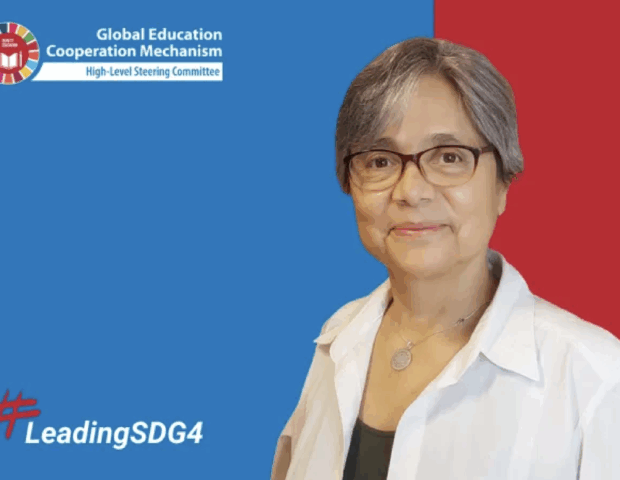
By Nelsy Lizarazo, General Coordinator of the Latin American Campaign for the Right to Education (CLADE), Vice-president of the Global Campaign for Education (GCE), and member of the SDG4 High-Level Steering Committee
The journey toward achieving Sustainable Development Goal 4 (SDG 4) has been marked by a significant shift in ambition: moving from a narrow focus on access to education toward the deeper transformation of education systems themselves. This transformation has been especially evident in efforts to dismantle gender inequalities in and through education, with the education movement firmly committed to advancing a society based on justice and care.
From the Beijing Platform for Action (1995) to the Incheon Declaration (2015), the international community increasingly recogniSed that education is never neutral. It either reproduces or challenges power structures, depending on how it is designed, taught, and assessed. By 2015, with the adoption of the Education 2030 Agenda, equity and equality had become inseparable from the concept of quality education.
In recent years, important progress has been made in translating commitments into concrete action. Initiatives such as UNESCO’s International Technical Guidance on Sexuality Education and UNGEI’s frameworks on gender-transformative education have moved the global conversation from broad declarations to operational strategies. These frameworks emphasise the need to transform social norms, tackle stereotypes in the classroom, and guarantee safe, inclusive learning environments. They also place teacher training at the heart of sustainable change.
Equally significant has been the growing leadership of civil society. Education networks and coalitions, alongside feminist movements, have gone beyond monitoring commitments to proactively shaping the agenda. Their advocacy has emphasized sustainable financing for gender-transformative education, feminist-informed pedagogies, anti-oppressive teacher training, and inclusive school environments that celebrate diversity. Civil society has therefore pressed governments and international agencies to move from rhetoric to policy action, demonstrating that justice can only be achieved when education is used as a tool to challenge entrenched inequalities, and when grassroots and feminist movements are central to driving change at the local level.
Challenges, setbacks, and perspectives
The last decade has also revealed the fragility of progress. Globally, we have seen a rollback in gender-responsive education policies, driven by alliances between authoritarian governments, ultra-conservative movements, and transnational “anti-gender” networks.
Afghanistan represents the most extreme regression, with girls systematically barred from secondary and higher education. In Europe, Hungary’s 2018 decision to eliminate gender studies from accredited programs illustrates another form of backlash, aimed at discrediting entire fields of knowledge. Across Latin America and elsewhere, campaigns against so-called “gender ideology” have sought to intimidate teachers, censor curricula, and restrict comprehensive sexuality education.
These attacks are not isolated. They form part of a coordinated ideological offensive that reframes gender equality as a threat to family, tradition, or national identity. Their impacts are felt directly in classrooms: censorship of inclusive content, unsafe learning environments for LGBTQI+ learners, and a climate of fear that discourages educators from implementing progressive approaches.
As the global community looks beyond 2030, the future of education and lifelong learning requires both the consolidation of past gains and bold new directions. Key priorities include:
- Embed global frameworks into national plans and budgets: Commitments under SDG 4 and SDG 5 must be translated into sector plans with gender-responsive budgeting and robust accountability mechanisms. Without financial backing, commitments remain symbolic.
- Guarantee comprehensive sexuality education (CSE): CSE is a proven tool to challenge stereotypes, prevent gender-based violence, and promote health and well-being. Ensuring its universal provision is fundamental to gender-transformative education.
- Address masculinities and prevent violence: Schools must become spaces to challenge harmful gender norms, from early childhood to adult education. Programs that engage boys and men in non-hegemonic masculinities, alongside strong protocols to address violence, are essential.
- Ensure policies for inclusion: Measures such as free menstrual health management, safe transport, scholarships, and re-entry programs for adolescent mothers have already shown results in African contexts and should be scaled globally.
- Protect academic freedom and inclusive curricula: Safeguards are needed to defend the autonomy of academic institutions, preserve the legitimacy of gender studies, and resist censorship of curricula that advance equality and diversity.
Alongside these priorities, sustained financing is crucial. National education budgets and donor aid must protect and expand resources for gender-transformative approaches, including the fundamental focus on care, resisting austerity and regressive funding cuts. Structural injustices such as regressive taxation, debt distress, and the imposition of austerity measures continue to restrict developing countries’ fiscal space and deepen inequalities, directly undermining the potential of education systems to advance gender equality.
Finally, partnerships with feminist movements and broader human rights coalitions will be vital to sustain momentum, amplify resistance to anti-gender backlash, and reimagine education as a site of justice, care, and democratic renewal.
Click HERE to read this blog on the UNESCO website.