FOCUS AREA › Our Collective Advocacy
Policy and Advocacy: Driving the Global Movement for the Right to Education
GCE’s policy and advocacy work drives collective action so that governments and international institutions guarantee the right to free, inclusive, quality public education and lifelong learning for all. As the global civil society voice on education, GCE connects grassroots realities to national, regional and global policy spaces and holds decision‑makers to account for their commitments under SDG 4 and human rights frameworks.
Index
WHAT WE ADVOCATE FOR
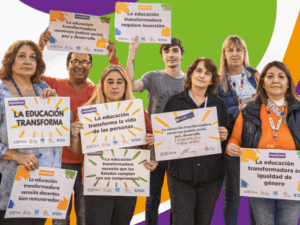
GCE’s advocacy is guided by a rights‑based agenda and a shared goal to reignite and grow the influence of the global movement for education. The movement advances foundational asks that cut across all advocacy and campaigning efforts:
- A free, inclusive, quality public education without discrimination or bias, from early childhood through adult learning.
- Lifelong learning opportunities for all people, across formal, non‑formal and informal education.
- Equality and inclusion, including gender equality and the rights of learners marginalised by disability, race, ethnicity, migration status, location and Sexual Orientation, Gender Identity and Expression, and Sex Characteristics (SOGIESC).
- Adequate recognition, remuneration and decent working conditions for teachers and education personnel, with strong professional development and union participation.
- Meaningful participation of students and pupils, including support for independent, democratic student unions and student voice in decision‑making.
OUR GLOBAL ADVOCACY PRIORITIES
GCE members advocate and campaign together around three joint worldwide priorities that reflect the most urgent barriers to the right to education.
Transforming Education
GCE calls for profound reforms so that education systems provide relevant knowledge, skills, values and attitudes for just, sustainable and peaceful societies, with a strong emphasis on climate justice, digital inclusion and lifelong learning. Policy advocacy focuses on quality climate change education, closing the digital divide, strengthening education leadership and protecting civic space in and around education.
Education in Emergencies and Crises
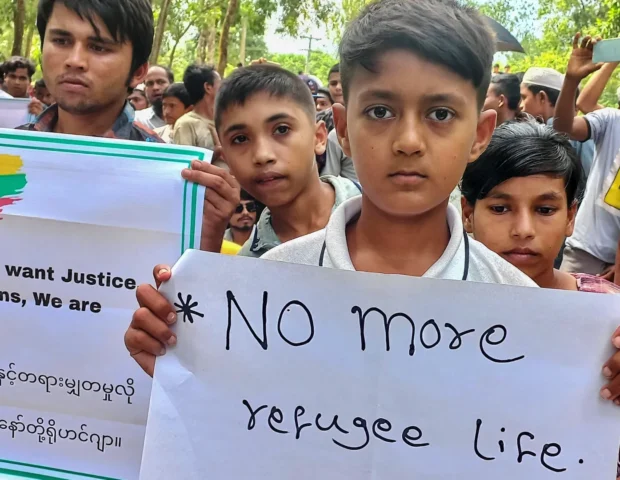
With millions of crisis‑affected learners and thousands of attacks on schools and universities, GCE advocates for crisis‑sensitive and inclusive planning and budgeting, protection of education facilities, and safe, continuous learning in conflict, disaster and pandemic contexts. GCE presses governments to adopt and implement the Safe Schools Declaration, guarantee education for refugees and displaced learners, and protect students’ rights to organise, protest and participate without fear of repression.
Education Financing
GCE campaigns for increased, equitable and accountable public financing of education, including fairer taxation, sufficient domestic budgets and adequate international aid across the development‑humanitarian‑peace nexus. Advocacy exposes the risks of privatisation and commercialisation of education and calls for monitoring of non‑state provision to safeguard equity and the right to education.
HOW WE WORK
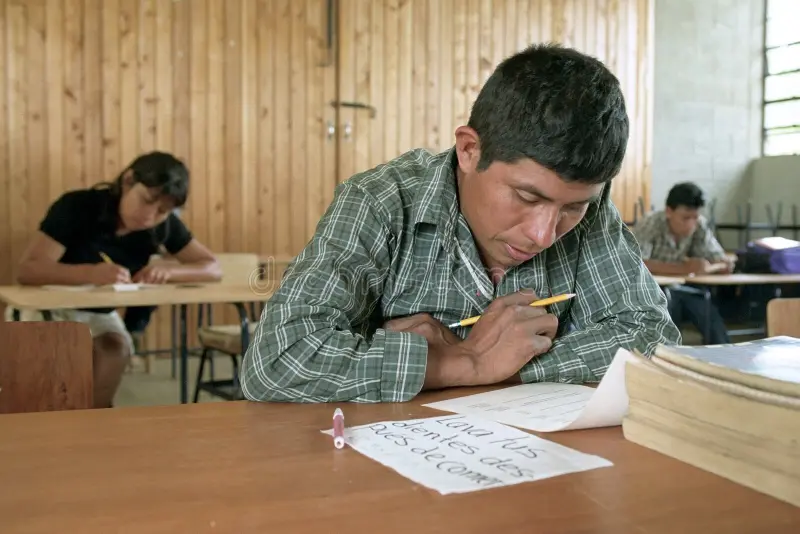
Under Strategic Objective 1, GCE seeks to “step up our influence through advocacy and campaigning” by strengthening civil society voice, joint action and timely responses on education issues.
Influencing Key Policy Spaces
GCE coordinates civil society engagement in national, regional and global forums for SDG 4 implementation and monitoring, including the Global Education Cooperation Mechanism, Global Education Meetings, GEM processes and UN human rights reviews. Members participate in policy dialogues with governments, multilateral institutions and financing bodies such as the World Bank, IMF, GPE and Education Cannot Wait to defend rights‑based education and challenge policies that undermine it.
Building Powerful Joint Campaigns
The movement designs and runs global and regional campaigns, including the annual Global Action Week for Education, that are adapted and localised by members in their own contexts. GCE supports coalitions to mobilise communities, engage traditional and digital media, and organise context‑specific policy dialogues with decision‑makers around shared messages and demands.
Taking Timely Positions and Solidarity Action
GCE develops membership‑informed policy positions and advocacy messages for key global moments, and issues rapid statements and responses when education rights are under threat. Through solidarity actions, media work and coordinated messaging, members collectively respond to attacks on students, teachers, civil society and the civic space needed to defend the right to education.
STRENGTHENING ADVOCACY CAPACITY
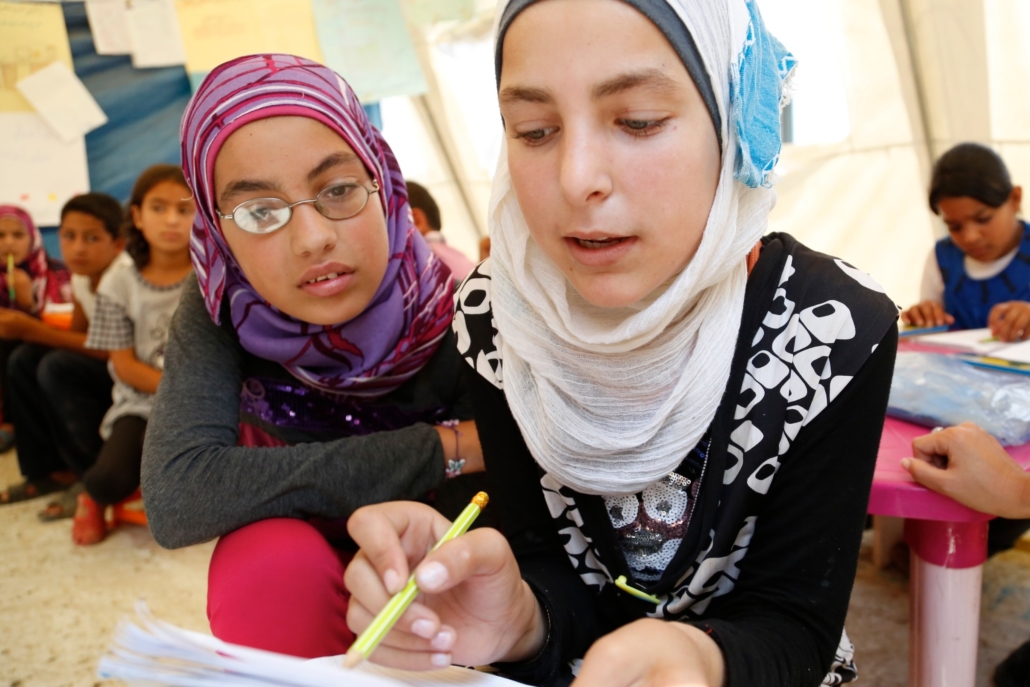
GCE’s policy advocacy is backed by research, learning and peer support that enhance members’ ability to influence. Structured learning initiatives, communities of practice and the online Learning Hub provide tools, evidence and practical resources for advocacy and campaigning across GCE’s priority themes.
Together with its diverse membership, GCE will continue to expand policy advocacy that transforms education systems, secures education in emergencies and ensures sustainable public financing for lifelong learning for all.