
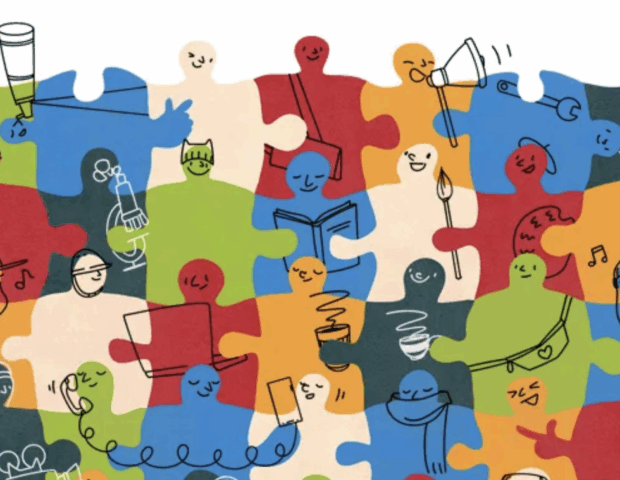
On International Day of Education 2026 (24 January), the Global Campaign for Education (GCE) joins the world in celebrating the power of the youth in co-creating education.
GCE recognises youth and students as equal and active co-architects of education and the future. Since its World Assembly in 2015, the GCE movement has been working with youth and students to drive education transformation by building evidence for advocacy and actions, exploring curriculum innovations and ensuring transparency and accountability in education and beyond. True to its commitment to meaningful youth leadership, GCE established a dedicated youth governance structure that places young people at the centre of decision-making. Through the Youth Action Group, young leaders from across the world identify and define their own priority advocacy issues, rooted in the lived experiences of their communities and regions. These youth representatives elevate local and regional concerns to the international level and play an active role in shaping GCE direction, including through formal representation on the GCE Board and GCE membership. This structure ensures that youth and student voices are not only heard but integrated in leadership, accountability and decision-making.
Co-creating decolonial education
In Africa, young people are at the forefront of transformative education, championing inclusive approaches that bring out-of-school and marginalised youth back into the education system, particularly those excluded due to conflict, displacement, poverty or restrictive cultural norms. Through the use of education technology tools, young people are helping expand education access, making for flexible, context-based and gender-responsive learning solutions, while also driving policy advocacy that engages education ministries and decision-makers. These efforts have focused on bridging deep socio-economic and digital divides that continue to limit equitable access to quality education. This youth-led work has generated significant impact in Nigeria, Ghana, Namibia and Sierra Leone, among others, therefore demonstrating the power of education as a catalyst for social transformation and decolonisation across the African context. Importantly, these approaches offer scalable and adaptable models for education in emergency settings, reinforcing the role of youth leadership in shaping resilient, inclusive and future-ready education systems.
Co-creating knowledge: the power to ask questions
In the Asia Pacific, youth advocates from 10 countries – girls from indigenous communities, out-of-school youth from urban poor communities and rural youth and students, among others- gathered evidence and connected with their peers through ASPBAE’s Youth-led Action Research (YAR). Boldly reaching out to marginalised young people, the youth volunteers defied lockdowns during the COVID-19 pandemic to gather stories of how young people were coping with their lives and education and then presented the youth’s recommendations to local governments and relevant ministries. To date, the marginalised youth in the Asia Pacific have conducted four YAR, which include one investigating the impact of mental health on education and another on challenging racism in education.
Co-creating leadership: youth-led governance in the Arab region
In the Arab region, the Palestinian national education coalition pioneered the activation of the Youth Learning Collaboratives model, successfully strengthening participatory leadership and enabling meaningful, youth- and community-led engagement in education governance. Building on this success, this experience was subsequently scaled across the Arab region, leading to the establishment of a regional youth collaborative platform grounded in principles of social accountability, inclusive participation and participatory strategic planning. Through this platform, young people are strengthening their collective capacity to monitor commitments and co-create solutions that respond to local and regional realities.
Co-creating financing: youth demand financing for education in emergencies
And, across Latin America and the Caribbean, national education coalitions have strengthened inclusive, meaningful and empowered participation of young people living in crisis contexts, in education policy and advocacy spaces. This progress has been driven by co-creating initiatives with young people, supporting youth driven advocacy campaigns on the provision and sustainable financing of education in emergencies. Youth perspectives on education in emergencies are no longer peripheral, they are increasingly reflected in the implementation, monitoring and review of the SDG 4 agenda at national and regional levels. Through research informed advocacy, social media mobilisation and virtual regional and global convenings, young people are building knowledge, sharing lived experiences and developing collective strategies for change.
GCE’s continuing journey and advocacy with youth and students on the right to education for all demonstrates how the youth, both the students and young people who have been pushed out of the education systems, have worked as knowledge producers, action initiators and education leaders.
GCE stands with the youth in lobbying governments to institutionalise youth participation in the country at local and national levels. GCE also calls on international/multilateral organisations to ensure inclusive, sustained and meaningful youth and student participation through the following principles and actions:
Action-oriented: Meaningful youth engagement should translate ideas into action. Young people need to be involved not only in ideation but also in the implementation and decision-making in education.
Clear aims and goals: Youth engagement is meaningful when there is a clear understanding of the goals of the engagement and the specific objectives of any collaboration. Information is key to understanding. Youth and students should be given prior access to briefing notes, technical papers and capacity building to enable youth and students to prepare their positions and agree on their commitments to any collaboration.
Shared ownership: Meaningful youth engagement is when young people feel and witness that their contributions are valued and have a tangible impact. Governments should go beyond collecting views from youth, the analyses and recommendations from young people must be integrated into education planning and budgets, programme implementation and monitoring.
Spelt out roles of various stakeholders: Collaboration is important, and outlining who does what and defining the timeline are key. Governments should ensure that young people – marginalised youth, girls, young women, ethnic and indigenous youth, youth with disability among others, who are both in school and out-of-school, must be empowered to participate and lead the implementation of education sector plans and learning programmes.
(Inter)generational dialogues and exchanges: Meaningful youth engagement is about ethical collaborations with adult counterparts and with fellow young people. Governments should put in place mechanisms for intergenerational dialogues and actions envisioned to transform education systems for the benefit of all.
Young people across the world, especially the GenZ, have been demanding free, quality and relevant public education for all, from basic to higher education. They call for education systems transformation that will expand education in different pathways from formal to non-formal to informal learning. They are lamenting the high cost of secondary and tertiary education. Together with Gen Z, GCE urges governments to put a stop to the privatisation of education that is driving inequalities and denying millions of youth their right to education. To sustainably finance education at all levels, governments should put in place progressive tax rules and support the adoption of the UN Framework Convention on International Tax Cooperation to build a more transparent, just, equitable, and accountable global tax system that will enable countries to sustainably finance quality public education and other services.
GCE calls on governments to urgently dismantle systemic and gender barriers to education. Education must prioritise historically marginalised and underserved learners, including girls, black and indigenous people, people with disabilities, displaced populations, and rural communities. Governments must ensure that public funds are consciously directed toward overcoming inequalities, fulfilling the right to education and shaping a sustainable, democratic future.
On the occasion of the International Day of Education 2026, the Global Campaign for Education stands with the youth worldwide and calls on governments and development partners to remain firm on their commitments to SDG 4 and invest in education and lifelong learning for all. Through education, we can secure lasting peace, achieve social justice and realise sustainable development. Amidst the conflicts and crises across the world, education is the best defence. It empowers the youth, students and people to safeguard the present and future of humanity and the planet.