FOCUS AREA › Gender and Inclusion
Gender Equality and Inclusive Education
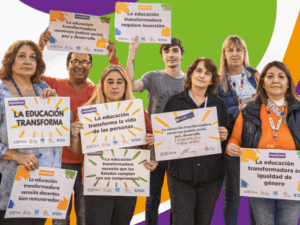
GCE’s Gender Inclusivity focus area advances education systems that are free from discrimination and bias and promote more just, equal and violence‑free societies. The movement treats gender equality as inseparable from the right to free, inclusive, quality public education for all learners.
Index
WHY GENDER INCLUSIVITY
Gender inequality and discrimination linked to disability, race, ethnicity, class, location, religion, migration status and other social characteristics continue to shape who enters, stays and succeeds in education. Global pushback on the rights of women and people of diverse Sexual Orientation, Gender Identity and Expression, and Sex Characteristics (SOGIESC) undermines progress and restricts access to comprehensive, rights‑based education.
School‑related gender‑based violence remains widespread, while women still shoulder a disproportionate burden of unpaid care work, exacerbated where free, public early childhood, primary and lower‑secondary education is lacking. These realities make gender‑transformative, intersectional approaches to education an urgent priority.
OUR VISION FOR GENDER-TRANSFORMATIVE EDUCATION
GCE defends education as a fundamental right for all people, including people of all genders, sexual orientations, gender expressions, identities and sex characteristics. The movement understands that gender inequality intersects with other forms of oppression such as racism, ableism and xenophobia, requiring responses that challenge multiple discrimination at once.
GCE acts so that education policies, systems and content promote more just and equal ways of thinking and acting, and support people to make informed decisions about their lives, bodies and relationships. Education must not perpetuate discriminatory norms, rigid gender stereotypes or the acceptance of violence as a tool to enforce patriarchy and other power hierarchies.
WHO WE STAND WITH
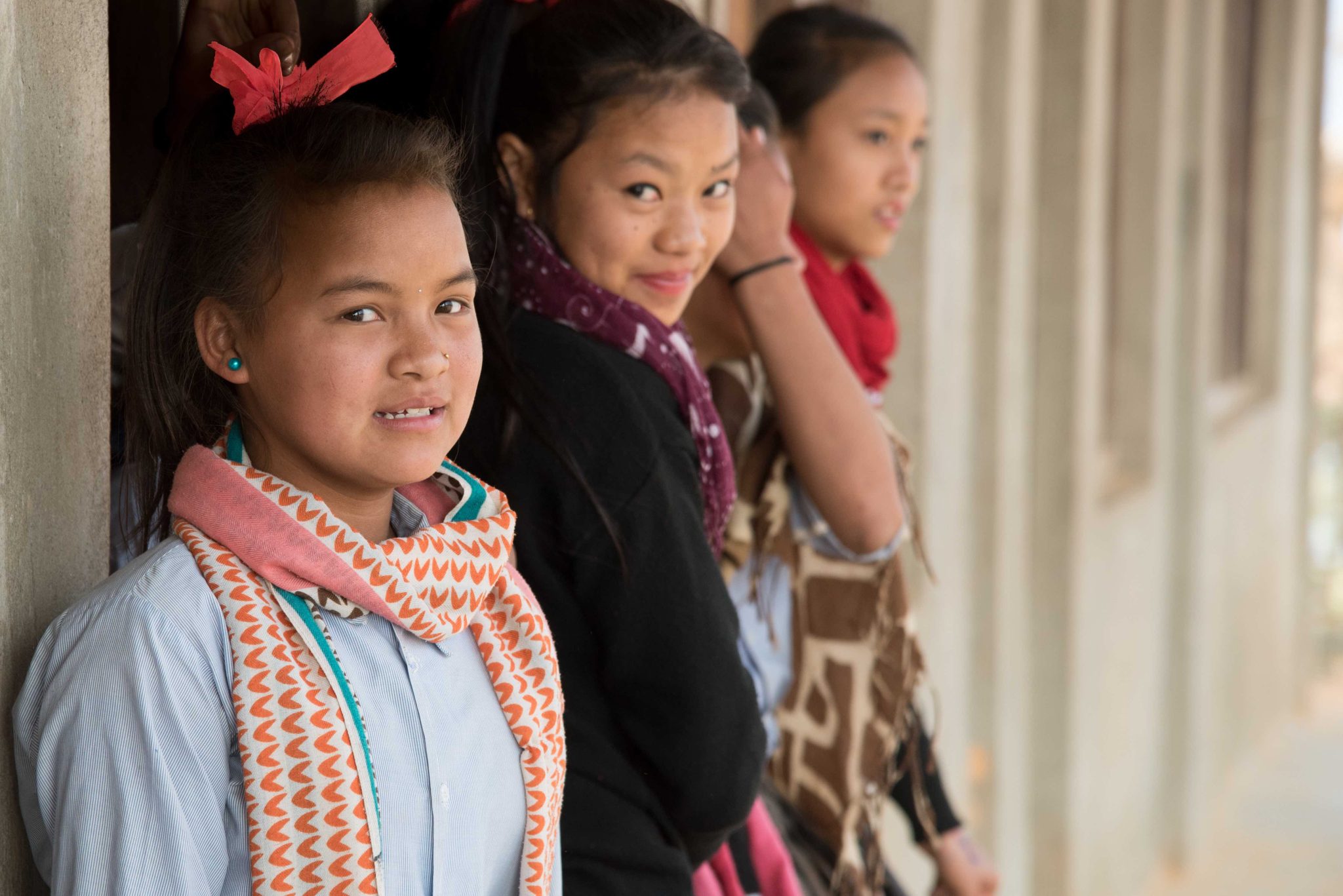
The Gender Inclusivity focus area centres solidarity with those most affected by gendered and intersecting exclusions in and through education.
- All women and girls who are out of school or pushed out because of unfair policies and harmful gendered norms, beliefs and practices that limit their educational and career choices.
- All people of non‑normative sexual orientation, gender identity and expression, or sex characteristics who face exclusion, invisibilisation or harm through restrictive education policies, content and institutional cultures.
- All learners who experience discrimination linked to disability, race, ethnicity, language, age, location, religion or belief, migrant or refugee status, or any other minority status.
- Everyone who stands up against sexism, heterosexism, homophobia, transphobia, racism, ableism, classism and other forms of social and economic oppression in education spaces.
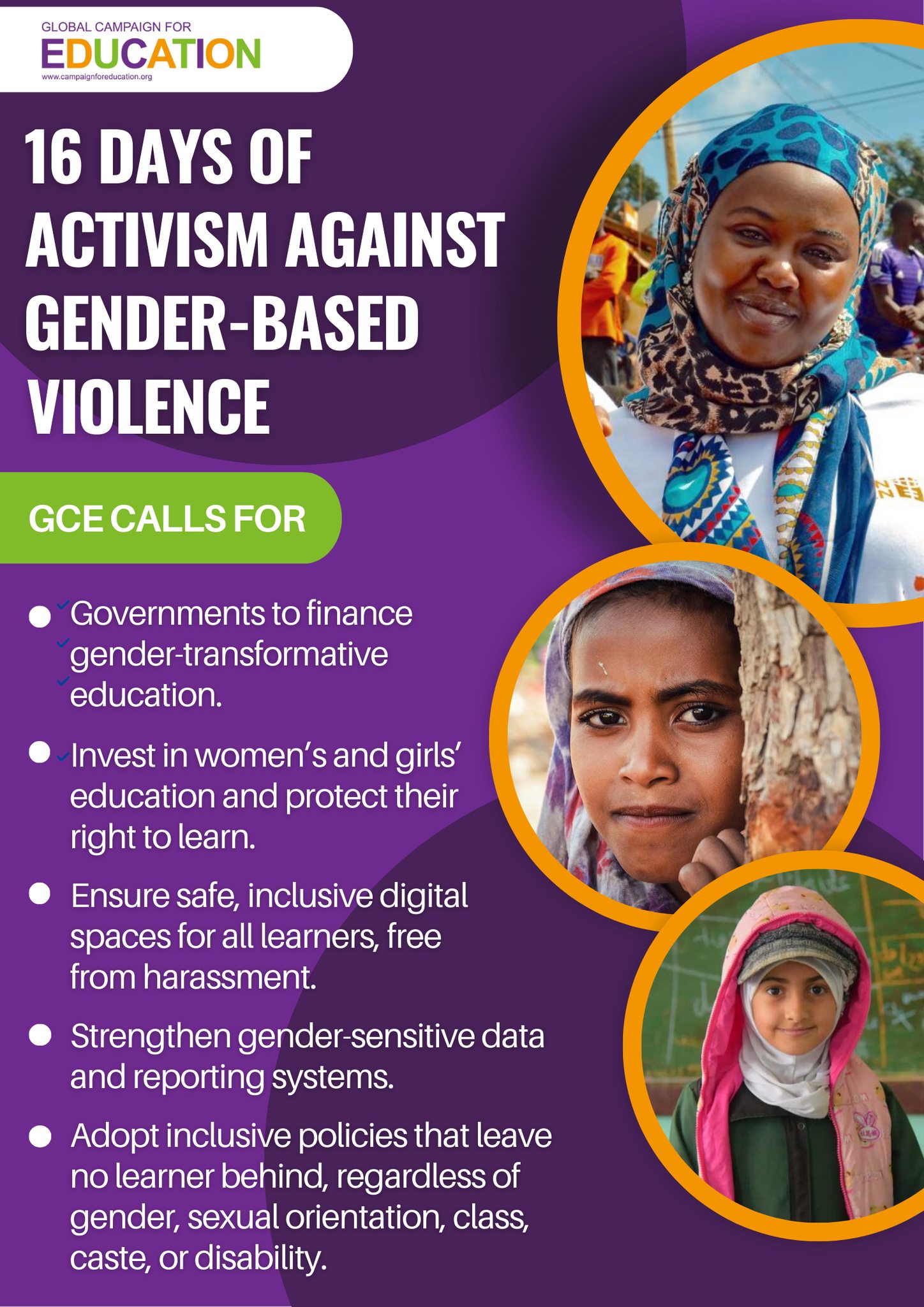
WHAT GCE CALLS FOR
Across its priorities, GCE advances a set of foundational asks on equality and inclusion in education.
- Governments must fulfil commitments to provide free, inclusive, quality public education without discrimination on grounds of gender, sexual orientation, gender expression, identity or characteristics, or any other status.
- Education laws, policies, curricula and practices should be aligned with international and regional human rights standards, including guarantees of non‑discrimination and gender equality.
- Education systems must prevent and address school‑related gender‑based violence, protect the rights and safety of all learners and staff, and ensure accessible complaint and accountability mechanisms.
- Comprehensive, evidence‑based sexuality education should support learners’ rights, bodily autonomy, diversity and healthy relationships, rather than reproducing binary, biased or stigmatizing content.
HOW THE MOVEMENT ACTS
GCE mainstreams gender equality and inclusion across all its global priorities—Transforming Education, Education in Emergencies and Crises, and Education Financing—as well as through a dedicated gender strategy. Members advocate for gender‑responsive laws, budgets and education sector plans, and challenge financing and privatisation trends that deepen gender gaps.
Through research, campaigning and learning spaces, GCE supports coalitions to adopt gender‑transformative approaches in their advocacy, monitoring and movement‑building. The movement also pushes for gender‑balanced leadership and meaningful participation of women, girls and people of diverse SOGIESC in education decision‑making at local, national, regional and global levels.