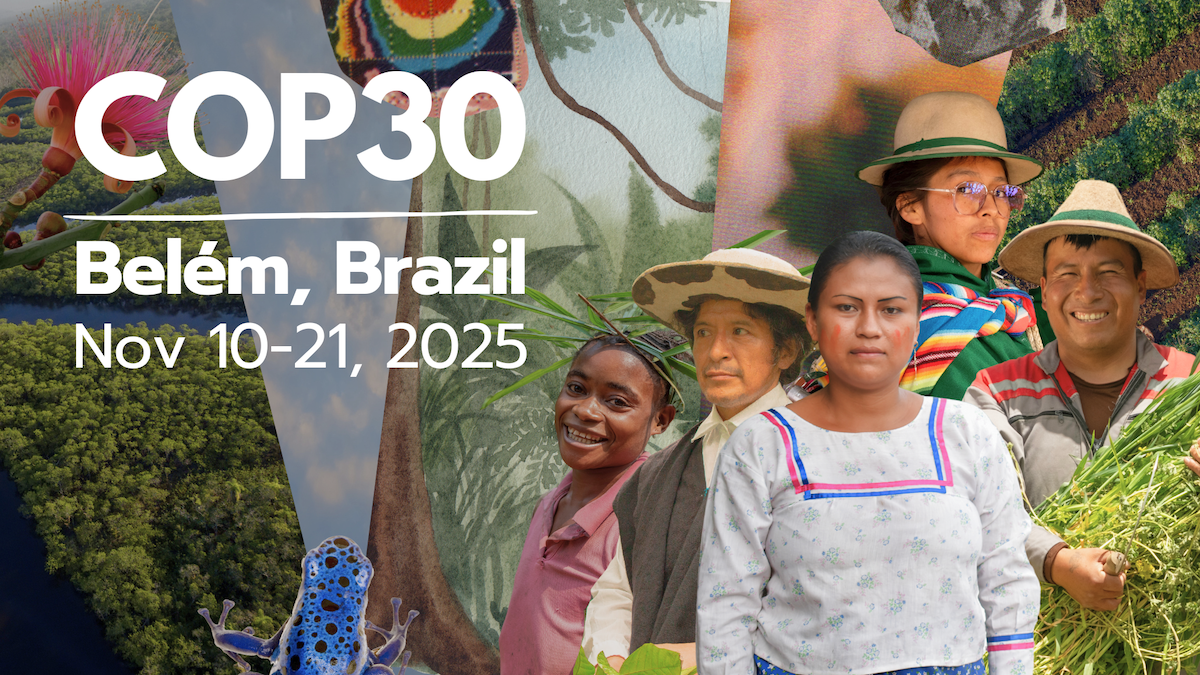
From 11-15 November 2025, Belém (Brazil) hosted the 30th Conference of the Parties (COP30) and the People’s Summit Towards COP30. In this context, the Latin American Campaign for the Right to Education (CLADE) reaffirmed its commitment to the human right to education, and to environmental, climate and gender justice, by curating a special transmedia feature that brought together key debates, reflections and experiences from these spaces of dialogue and collective action.
During COP30 and the People’s Summit, CLADE launched its position paper “For the Human Right to Education with Environmental, Climate and Gender Justice”, developed with broad participation from its membership. The document argued that climate change posed a significant threat and that education must play a central role in preparing populations for climate action, integrating human rights, intersectoral and intersectional approaches to build an equitable world with social and climate justice.
The paper underlined that environmental and climate justice should be a central pillar of transformative public education systems that question the dominant development model based on exploitation of nature and wealth accumulation. It also stressed that the most vulnerable groups, who are least responsible for climate change, were the most affected yet often held crucial knowledge to drive real solutions.
On 12 November, in the framework of the People’s Summit and COP30, CLADE launched the study “Approach to Climate Justice in National School Curricula in Latin America and the Caribbean”. The study, presented by Israel Quirino, Programmes Assistant at CLADE, analysed how public basic education curricula in countries such as Bolivia, El Salvador, Honduras and Peru addressed climate change, and to what extent they incorporated notions of intersectorality, intersectionality, climate justice, indigenous and Afro-descendant knowledge, and Gender Transformative Education (GTE).
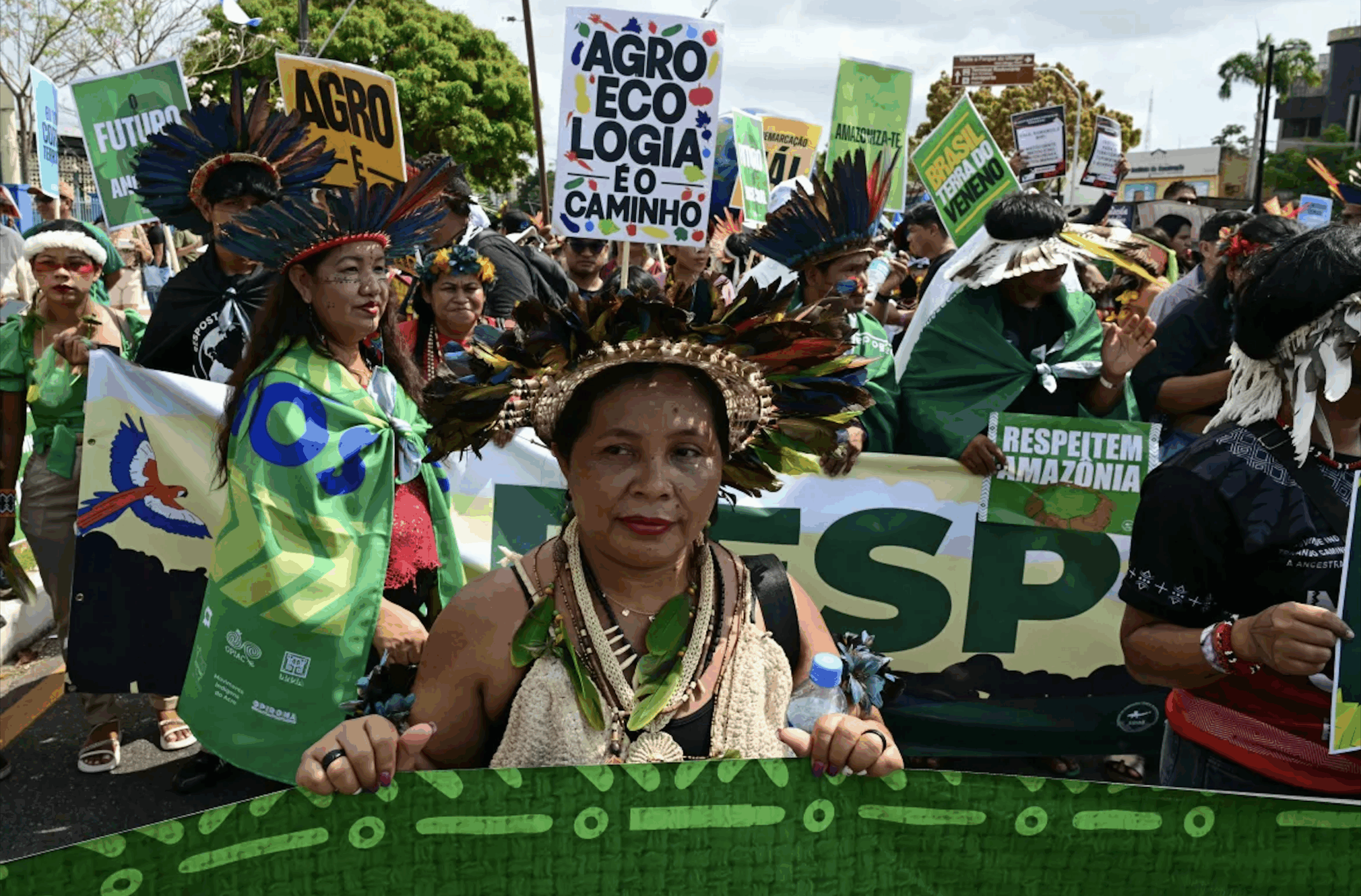
The launch took place during the event ‘Education Pathway for Environmental Justice: democratic education as the root of critical environmental education and confronting the climate crisis’, held at the Faculty of Education of the Federal University of Pará (UFPA). Organised by the Brazilian Campaign for the Right to Education, the event brought together teachers, researchers, activists, parliamentarians and civil society organisations committed to strengthening critical and transformative environmental education.
Another key publication highlighted at COP30 was the report ‘Gender Transformative Education for Climate Justice: connections and advocacy actions’. The report sought to link Gender Transformative Education (GTE) with climate justice by summarising existing literature on gender, climate-related disasters and the role of education in reducing inequalities, and by identifying the connections between gender and climate justice within international agreements.
The report adopted a gender-transformative and intersectional lens to identify the impacts of climate disasters on schooling and wellbeing, particularly for girls and adolescents in Latin America and the Caribbean. It offered advocacy recommendations to strengthen both GTE and climate justice, positioning education as central to confronting climate emergencies.
On 14 November, the Casa Futura space hosted the launch of the ‘Little Big Knowledges Glossary’, produced by ActionAid. This publication compiled terms related to climate justice, constructed from the perceptions, experiences and language of children and adolescents from diverse Brazilian territories.
The glossary was the result of a three-year education and participatory process implemented by ActionAid and 15 partner organisations in seven territories across six Brazilian states, including urban peripheries, rural communities, indigenous lands and quilombola territories (Afro-Brazilian community). Through workshops using words and drawings, children collectively created meanings for concepts such as “environmental racism”, “water”, “sanitation” and “housing”, strengthening their autonomy and critical awareness of rights and territories.
On 14 November, CLADE, together with the Council of Popular Education of Latin America and the Caribbean (CEAAL), convened a conversation circle titled “Community Popular Education in the Pan-Amazon: Sustainable territories, political advocacy and food sovereignty in education and climate agendas”. Held in the framework of the People’s Summit, the event followed on from the Pan-Amazon Social Forum (FOSPA), held in September in Bogotá, Colombia, where experiences and campaigns around food sovereignty, just transitions and territorial defence were shared.
Participants discussed how defending the human right to education in Amazonian territories required popular, intercultural and community education that is committed to environmental and climate justice, gender transformation and overcoming inequalities. As Israel Quirino emphasised, education in the region was both a victim of extreme climate events and a key driver for overcoming the climate crisis.
Throughout COP30, youth and Indigenous voices gained visibility in Belém. Carolina Rodríguez Polo, a young volunteer from Cartagena, Colombia, and member of Fe y Alegría’s Generation 21+ network, stressed that education must be a central pillar of the global response to the environmental emergency and of efforts to empower young people as agents of change.
The Latin American Association for Popular Education and Communication (ALER), a CLADE member, organised on-the-ground media coverage of COP30 and the People’s Summit, including programmes such as “Voices from the Pan-Amazon”, “Afternoon programme on youth participation” and “Afternoon programme on Nationally Determined Contributions (NDCs)”. ALER’s opinion article ‘COP30: Everything indicates that government negotiations and civil society positions are moving in opposite directions’ warned about the presence of 1,602 delegates with declared links to the oil and gas sectors and highlighted that the global march mobilised more than 3,000 people in the streets.
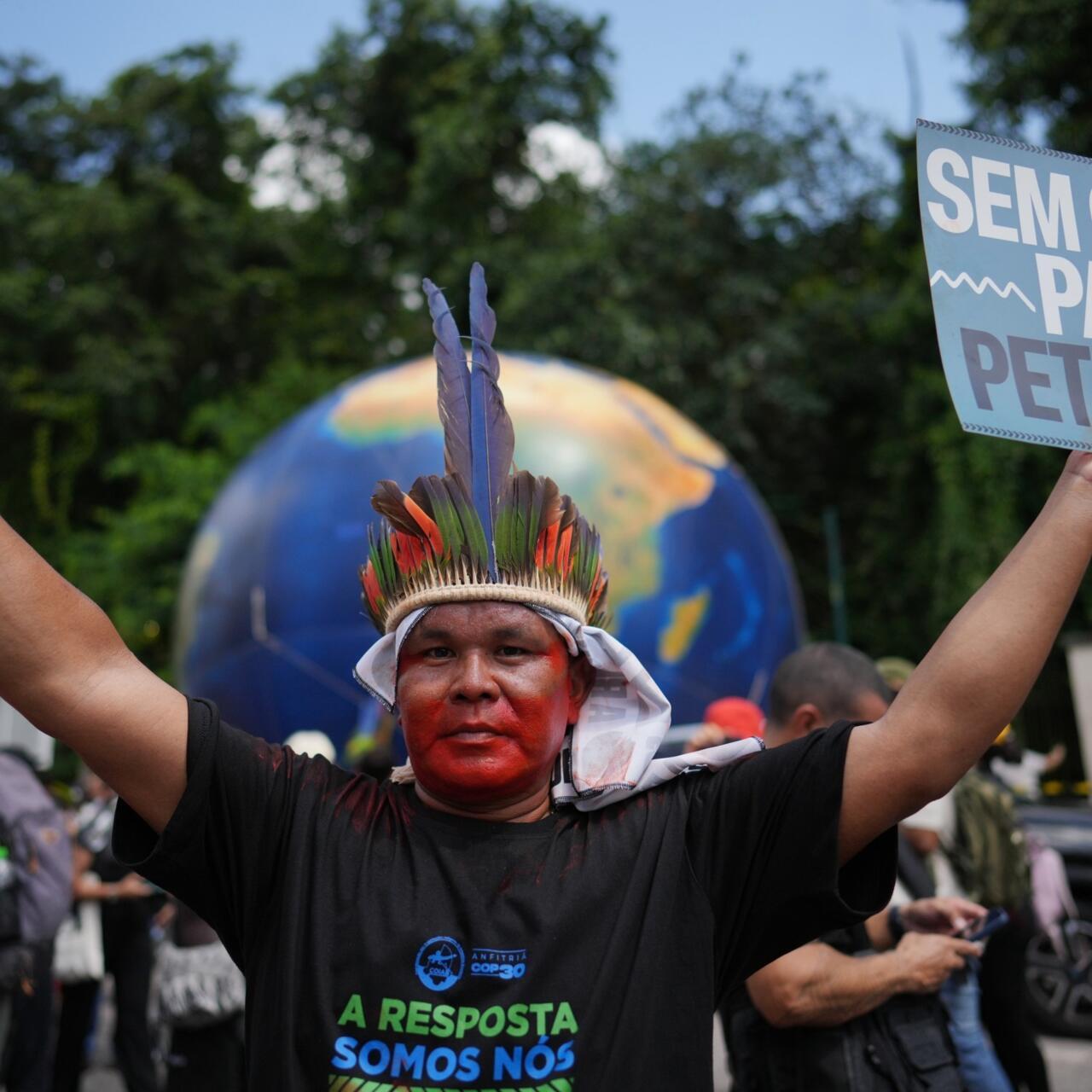
For many Indigenous peoples, the debates on carbon markets and forest credits were a reminder of why they placed their trust in the demarcation and protection of their territories as the most effective path to climate solutions. Their message in Belém focused on climate justice and a transition away from fossil fuels, rather than on financial compensation mechanisms that risked undermining their rights and lands.
Together, these initiatives demonstrated how education actors, social movements, Indigenous peoples, quilombola communities and young people across Latin America were already weaving concrete alternatives to an unjust and extractive model of development. Rooted in territories and lived experience, their demands in Belém pointed towards a future in which public, free, inclusive and gender-transformative education plays a decisive role in securing environmental and climate justice, protecting rights and sustaining life on the planet.
Click HERE to download this story.