

Across the Asia-Pacific, young people are reclaiming civic space and demanding justice, equality, and accountability. In 2025 alone, youth-led movements have erupted in several countries, from the streets of Mongolia and Indonesia to Nepal, Timor-Leste, and the Philippines. These collective actions reflect a deep regional tradition of student and youth activism, one that continues to fuel social transformation.
Young people have long been a moral and political force within the region’s history. They have spoken truth to power, challenged oppression, and redefined the boundaries of democracy and civic participation. From overthrowing dictatorships and opposing wars to calling out corruption, inequality, and environmental destruction, youth movements in the Asia-Pacific remain at the heart of the struggle for justice and peace.

On 21 September 2025 – the 53rd anniversary of Martial Law – tens of thousands of Filipinos filled the streets in what became known as the Trillion Peso March Against Corruption. Civil society leaders, church groups, and ordinary citizens marched to condemn the massive misuse of public funds in so-called “ghost flood control projects.” Wearing white and carrying placards, protesters demanded justice and transparency, calling for the arrest of those responsible and the full return of stolen funds. “Every peso stolen is a life denied,” noted one participant. The march transformed into a collective cry for dignity and accountability, uniting individuals from all walks of life under the common call: Enough is enough.
Reflecting on the experience, Lae Santiago, Advocacy and Youth Engagement Officer of the Asia South Pacific Association for Basic and Adult Education (ASPBAE), observed: “It is one thing to learn history from books, but to live it is an entirely different experience. We marched because we knew the stakes, not only for ourselves but for future generations.” Lae stressed that education is key to transforming systems of corruption and inequality, arguing that schools must nurture critical thinking, civic engagement, and a commitment to human rights.
In Indonesia, 2025 saw a wave of massive demonstrations against government corruption, economic hardship, and political repression. Sparked by local uprisings in Pati, Central Java, the movement swelled into a nationwide protest led by youth and Gen Z activists. Protesters’ demands addressed long-standing grievances, from unfair tax policies and corruption scandals to environmental exploitation. When a young online driver, Affan Kurniawan, was killed after being run over by a police vehicle during the protests, outrage spread across the country. The incident symbolised the deep disillusionment among young Indonesians facing inadequate governance and shrinking civic freedoms.
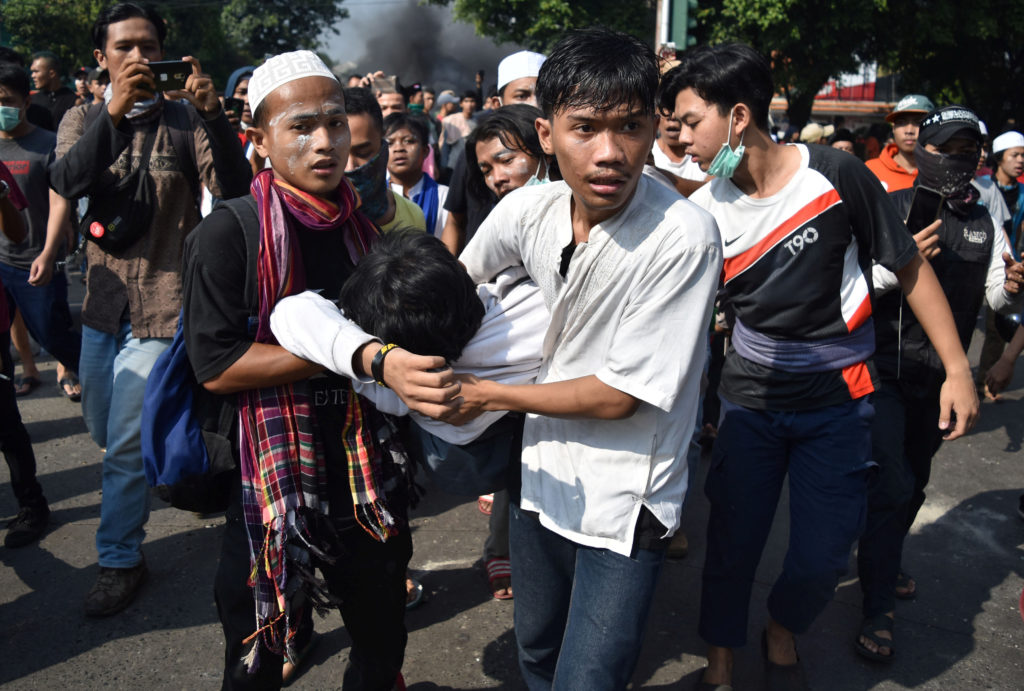
According to Anna Bella Sabilah, Youth Coordinator of the Network for Education Watch (NEW) Indonesia): “The people’s anger was born out of exhaustion, from the endless cycle of corruption and injustice. Yet the strength of this movement lies in our solidarity – farmers, traders, drivers, and ordinary citizens standing as one.”
Despite state repression, activists continued organising through digital platforms, using social media to mobilise support, raise funds, and spread information. Movements such as #WargaBantuWarga (Citizens Help Citizens) and #SalingJaga (Mutual Protection) became crucial symbols of horizontal solidarity across communities. Young Indonesians adopted creative resistance symbols – “brave pink,” “hero green,” and “blue resistance” – infusing their struggle with culture, humour, and resilience.
From 15-17 September, the streets of Dili filled with thousands of protesters, primarily university students who mobilised against the Timorese Parliament’s Lifetime Monthly Pension Law and its plan to purchase new luxury cars for lawmakers. The demonstrations, led by student coalitions and supported by civil society organisations such as the Civil Society Education Partnership (CSEP) and the Marginalised Youth Forum (MYF), demanded that public funds be redirected toward health, education, agriculture, and tourism.
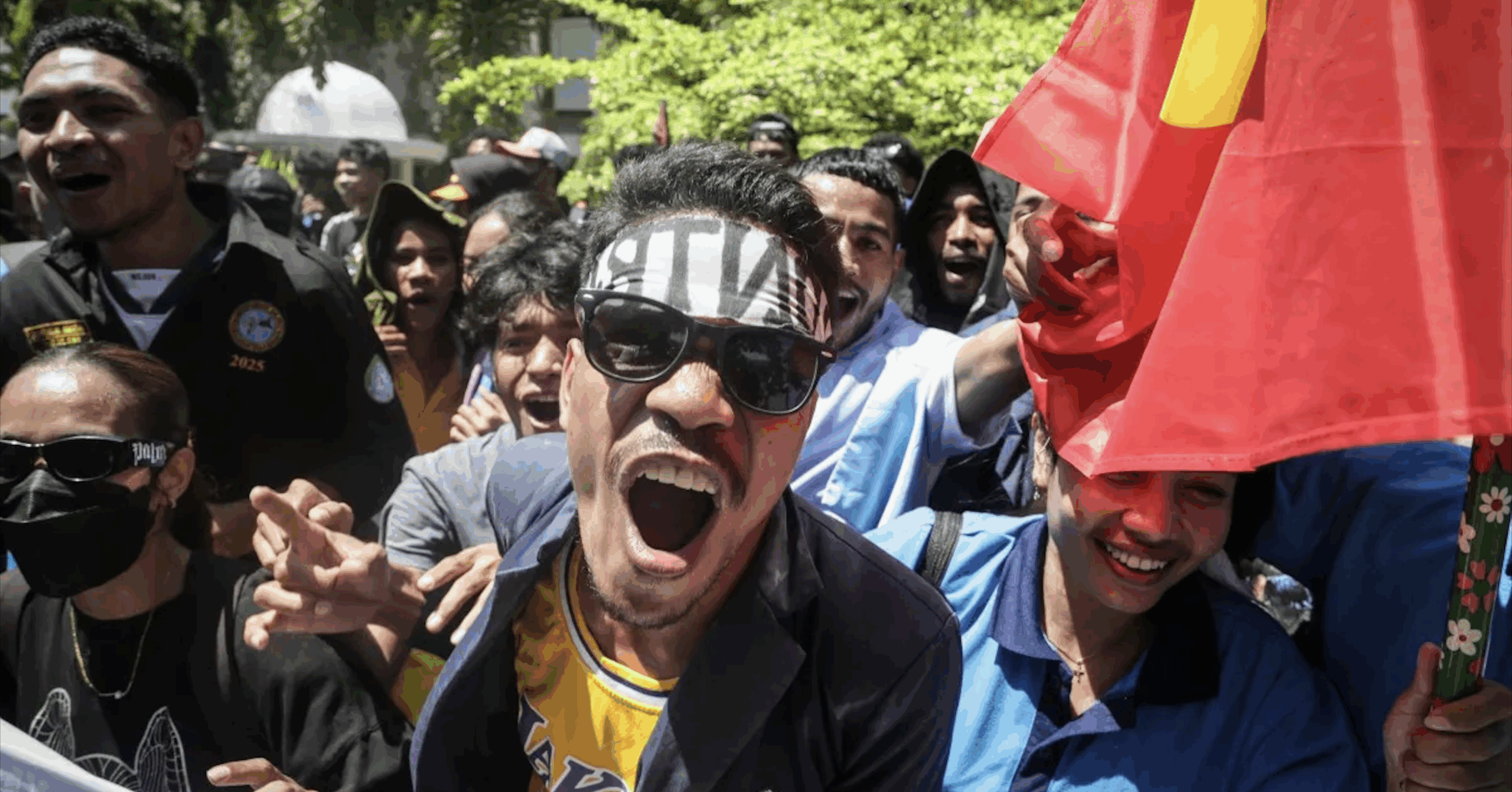
Following three days of determined protest, and despite clashes with police, students secured a historic victory. On 5 September, all 63 Members of Parliament voted unanimously to repeal the Lifetime Monthly Pension Law, marking a milestone for youth-led advocacy in the country. As Feliciano Soares, Research and Advocacy Officer at CSEP, wrote: “This victory proves that when youth unite with purpose, courage, and clarity, even the most entrenched systems of privilege can be dismantled.”
Across the Asia-Pacific, young people are not merely reacting, they are constructing visions for more just and participatory societies. Through grassroots organising, online mobilisation, and creative expression, they continue to confront corruption, inequality, and authoritarianism. Their resilience shows that movements for change can thrive even under repressive systems. As Sabilah noted, “The true power of young people lies in resilience and creativity. Resistance will never run out of ways to live on and multiply.”
Whether on the streets of Manila, Dili, or Jakarta, the message remains the same: today’s youth will not be silenced. United by shared struggles and collective hope, they are pushing the Asia-Pacific closer to a democratic, inclusive, and accountable future.
Click HERE to download this story.